



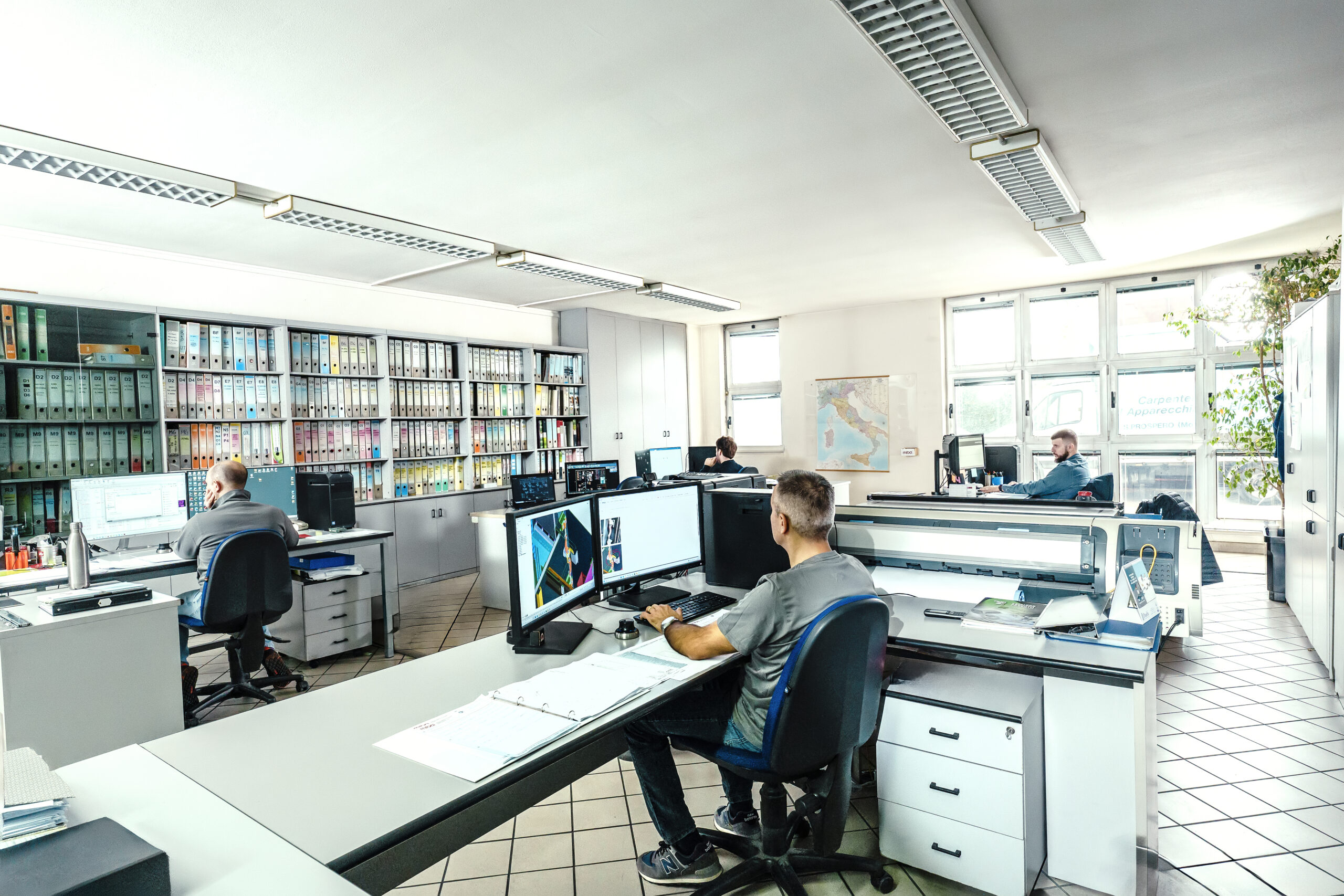
The journey of new product development, from CAD design to series production, is one of the most critical stages. This is where a design concept must prove to be not only technically sound but also genuinely manufacturable, cost-effective, and repeatable over time.
Accelerating time-to-market is a top priority for many companies today. However, attempting this without proper production verification can lead to delays, rework, and unforeseen costs. Therefore, selecting the right partner for rapid sheet metal prototyping becomes a strategic decision.
A prototype is not merely a physical piece to observe or test. It represents the first true validation of a component's industrial feasibility. When executed methodically, it allows for anticipating production criticalities, correcting the design before series production, and significantly reducing overall investment risk.An effective prototype must answer a fundamental question: Can this component be efficiently and repeatably mass-produced while adhering to the target cost?
A supplier who merely replicates a 3D file offers only a partial service. True expertise lies in the ability to interpret the design from a manufacturing perspective, proactively identifying potential workshop criticalities.
A concrete example involves material optimization. A design that overlooks nesting on standard sheet metal formats can lead to significant material waste and a substantial impact on final costs, particularly during series production.
The same holds true for thermal deformations. A complex component with numerous welds can experience heat-induced warping if not designed and fabricated with appropriate considerations. This can result in a failure to meet dimensional tolerances, leading to rework or scrap.
These are aspects that CAD software doesn't always highlight, but a partner with expertise in metal fabrication recognizes and addresses from the earliest stages.With 50 years of experience in metal fabrication, MIBA has built its expertise by consistently addressing these challenges. Prototyping thus evolves into a co-design process, where the component is analyzed, refined, and optimized for production readiness.
A particularly critical aspect involves welded assemblies. Welding jigs are often built based on the initial prototype. If that prototype contains inaccuracies—for example, due to an unoptimized bending cycle or improperly evaluated material springback—the jig itself may prove unsuitable for series production.
This can lead to rework, delays, and production stoppages. An experienced partner anticipates these issues, transforming the prototype into a tangible tool for industrial validation. Furthermore, process reliability is bolstered by structured systems and certifications, ensuring method, quality, and control.
The Return on Investment (ROI) of properly executed prototyping isn't solely measured by the cost of a single sample. True value emerges when considering the entire product lifecycle.
A prototype developed with an integrated partner significantly reduces the number of iterations, because each sample is not an isolated experiment but a well-reasoned step toward the definitive version. This, in turn, shortens development cycles and accelerates time to production.
The benefits also extend to the Total Cost of Ownership. A component optimized during prototyping requires less machine time, generates less scrap, and significantly reduces the risk of non-conformities during series production. All these factors collectively contribute to a lower real cost per piece in the medium and long term.
At MIBA, prototyping utilizes the same technologies, equipment, and quality control protocols employed for full-scale production. This continuity offers a decisive advantage: what is validated in the prototype is genuinely transferable to final production.
Consequently, there is no disconnect between the testing phase and production reality. Tolerances, quality, and process logic are verified from the outset using criteria consistent with series production.
Rapid sheet metal prototyping should not be viewed as a mere quote request for a shaped part. It is a strategic phase that safeguards prior design investments and establishes the conditions for more efficient production.
Leveraging 50 years of accumulated experience, MIBA partners with clients, offering technical insight that extends beyond pure execution. Every design is also evaluated for assembly, maintainability, logistics, and industrialization.
Choosing the right partner, therefore, means mitigating risks, containing hidden costs, and accelerating product market success. Because a well-made prototype isn't just about visualizing a component; it's about understanding how to produce it better.MIBA turns your ideas into reality.
We carry out customised work according to your specifications and support you every step of the way.