



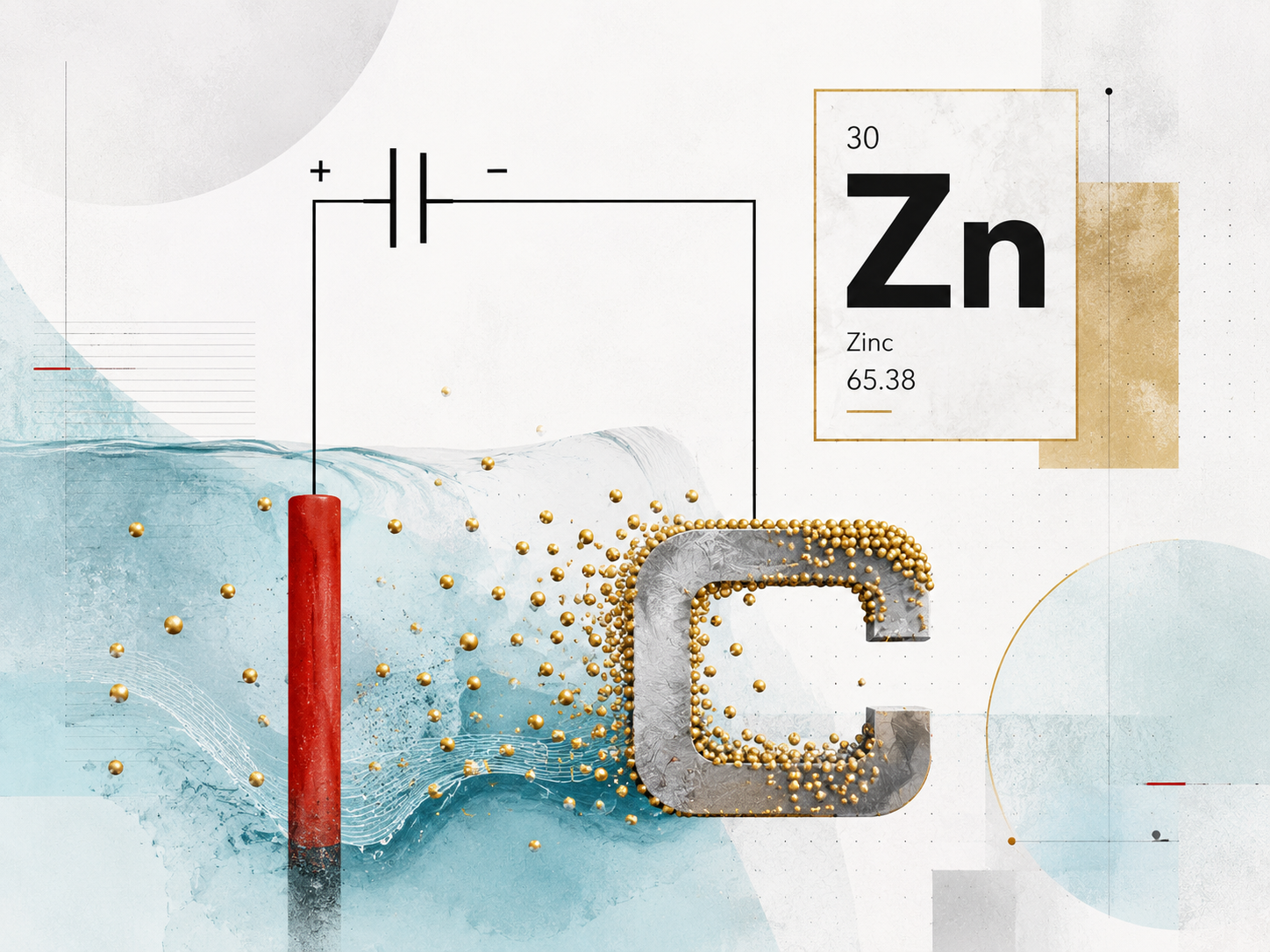
The durability of metal components also depends on their ability to withstand the operating environment. Zinc plating, electroplating, and e-coating are crucial solutions for preventing corrosion and degradation. However, selection must consider the specific application, part geometry, and required performance.
Zinc plating protects steel through the principle of sacrificial zinc protection. Electro-galvanizing provides a thin, uniform, and precise coating, suitable when finish and dimensional control are critical. In contrast, hot-dip galvanizing creates a thicker, more robust layer, ideal for outdoor or aggressive industrial environments.
E-coating operates with a different principle: it creates a uniform, insulating barrier capable of covering internal cavities, sharp edges, and complex geometries. Furthermore, it serves as an effective base for subsequent aesthetic finishes, such as powder coating.
The durability of a metal component relies not only on material quality or mechanical design but also on the surface treatment chosen for corrosion protection. For designers and purchasing managers, an incorrect choice can lead to premature degradation, production waste, higher maintenance costs, and field issues.
Among the most common treatments is zinc plating, the application of a zinc layer onto steel or iron. Zinc protects the underlying metal by corroding preferentially, thereby preserving the ferrous substrate longer.
The two most common solutions are electro-galvanizing and hot-dip galvanizing.
L’electro-galvanizing deposits zinc via an electroplating process. It produces a thinner, uniform, and controlled coating, ideal when dimensional precision, aesthetic quality, and subsequent paintability are crucial. It suits components destined for moderately corrosive environments.
La hot-dip galvanizing, on the other hand, involves immersing the part in molten zinc. This generates a thicker, more robust layer, ideal for outdoor, industrial, or severe environmental conditions. However, careful consideration is needed for thin sheets or delicate geometries, as the heat from the process can cause deformations.
At MIBA, with 50 years of experience in metal fabrication, these aspects are considered already during the design phase. Non-uniform thicknesses, inadequate pre-treatments, or incorrect protective cycles can compromise component adhesion, lifespan, and conformity, especially when regulatory requirements like EN 1090 are involved.
La E-coating offers a different type of protection compared to zinc plating. It relies not on sacrificial protection but on creating an insulating, continuous, and homogeneous barrier on the component's surface.
The process involves immersing the part in a tank containing water-based paint and applying an electrical current. Paint particles then deposit uniformly onto all exposed surfaces, including internal cavities, sharp edges, and areas difficult to reach with traditional painting methods.
This characteristic makes e-coating particularly effective on welded frames, complex structures, and components with intricate geometries, where incomplete coverage could reduce protection over time. The resulting film ensures good corrosion resistance and also provides an ideal base for subsequent finishes, such as powder coating.
This process also demands control: bath parameters, electrical currents, immersion times, and surface conditions must be precisely managed. MIBA oversees these operations through a network of qualified suppliers, selected to operate according to shared standards and system certifications.
Zinc plating, electro-galvanizing, hot-dip galvanizing, and e-coating are not interchangeable treatments. The choice depends on the operating environment, part geometry, tolerances, aesthetic requirements, and the required level of corrosion resistance.
Hot-dip galvanizing is indicated when robust protection is needed in aggressive environments. Electro-galvanizing is suitable when precision and a controlled finish are required. E-coating is ideal for complex geometries and as a uniform primer for subsequent painting cycles.
Assessing the correct treatment from the outset reduces risks, waste, and premature wear. A component's quality is measured not just when it leaves the production facility, but by its ability to withstand the test of time.
MIBA turns your ideas into reality.
We carry out customised work according to your specifications and support you every step of the way.