Strategic Metal Surface Treatment: Shot Peening or Tumble Finishing?

    18 September, 2026

Summary

Surface finishing is a critical technical parameter for any metal component, directly impacting its performance and durability. The choice between shot peening and tumble finishing is strategic, directly influencing costs and quality. With over 50 years of experience, MIBA offers tailored solutions, identifying the technically and economically most suitable process for each specific need, rather than promoting one technique as universally superior.

The importance of surface finish and shot peening

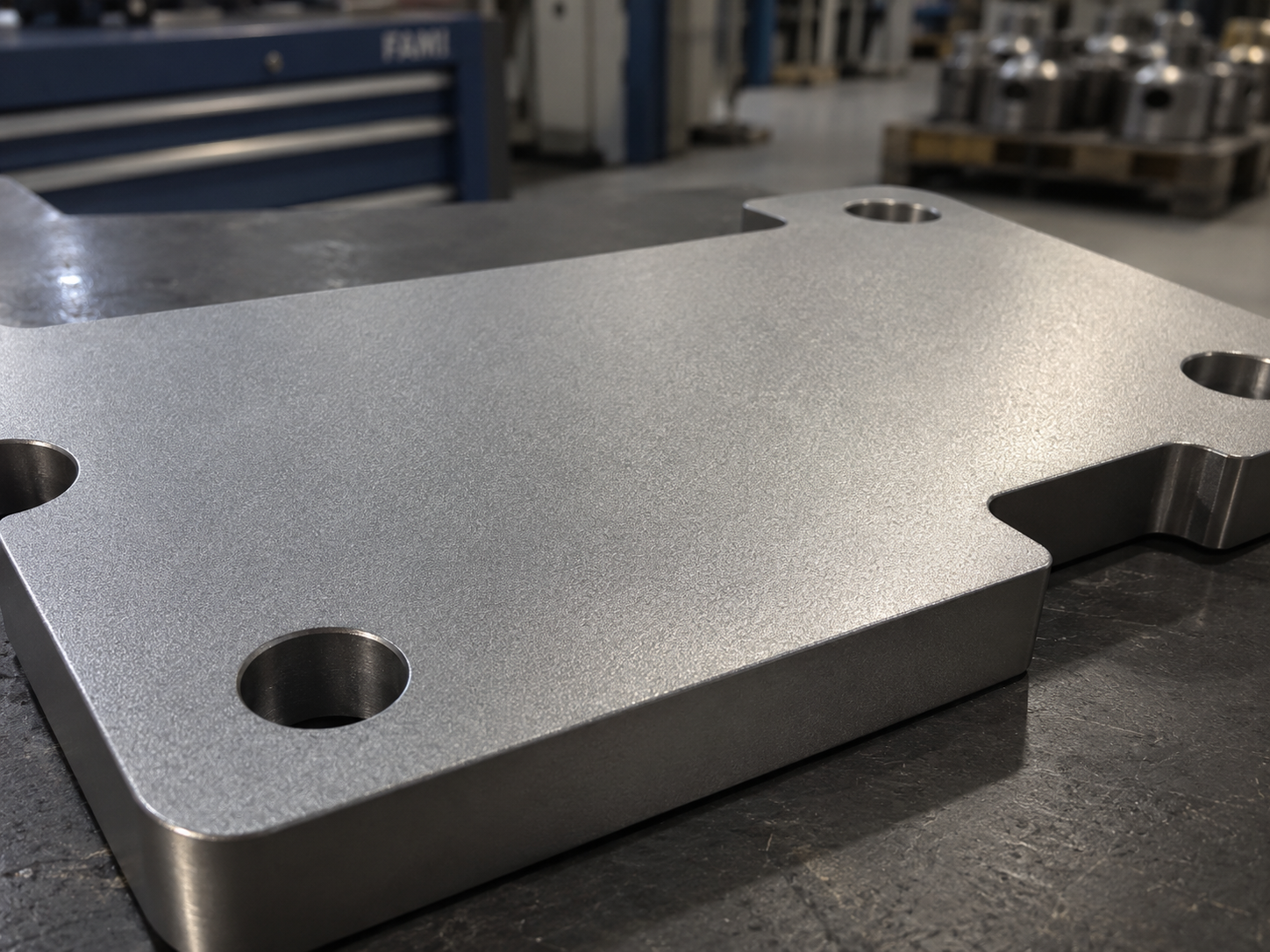
The surface finish of a metal component is not merely an aesthetic detail; it is a fundamental technical parameter that dictates its performance, durability, and integration into the final product. For a designer or purchasing manager, selecting the correct treatment is a strategic decision directly impacting costs and quality. Navigating the choice between shot peening and tumble finishing requires a clear understanding of each process's physical mechanisms and application objectives. An incorrect choice leads to production scrap, warranty claims, and inefficiencies. Our 50 years of experience in metal fabrication have taught us that no single technique is universally superior; only the solution technically and economically best suited for a specific requirement. La Shot peening is an impact-based finishing process where the metal surface is struck by a controlled flow of micro-spheres made of glass, ceramic, or other inert materials. Unlike traditional sandblasting, which primarily abrades and removes material, shot peening acts via cold plastic deformation. The repeated impact of the spheres not only cleans the surface of oxides, welding residues, or contaminants but also induces a state of residual compressive stress in the material's surface layers. This effect, known as controlled shot peening, is crucial for increasing a component's fatigue resistance , delaying crack initiation and propagation. It is ideal for stainless steel or aluminum components requiring a homogeneous, matte finish, technically defined by a precise roughness value (Ra). This is essential for ensuring optimal adhesion of subsequent coatings like paints or PVD treatments. Consider a welded frame for medical equipment, manufactured according to EN 1090 standards. Here, shot peening effectively cleans heat-affected zones from welding without contaminating the base material or altering dimensional tolerances. It prepares an ideal surface for painting , ensuring an impeccable aesthetic and functional result.

Tumble finishing: efficiency for mass deburring

La Tumble finishing, also known as vibratory finishing or mass finishing, operates on an entirely different principle. It is a mass process performed within a vibrating tub or a rotating barrel, where parts are mixed with abrasive media (chips) of various shapes and materials, along with a liquid solution of additives. Its primary purpose is the removal of burrs and sharp edges, typically generated by processes like laser cutting, punching, or stamping. Its efficiency lies in its ability to process large volumes of small to medium-sized parts at a very low cost per unit, with minimal manual intervention. Consider the production of thousands of small brackets or fastening plates. Manually deburring each piece would be slow, expensive, and yield inconsistent results. Tumble finishing automates this process, ensuring every component leaves with rounded edges and a smooth surface, safe to handle and ready for subsequent treatments like galvanization. However, its non-selective nature makes it unsuitable for large components, parts with complex geometries that could interlock, or thin sheet metal prone to deformation from mutual impact. At MIBA, our analysis starts precisely here: we evaluate part geometry, material, batch size, and the required finish to determine if the cost savings offered by tumble finishing are genuine, or if they conceal risks of part damage – an issue often discovered only at the end of the cycle, once the damage is irreversible.

Shot peening vs. tumble finishing: the strategic choice with MIBA

The final decision between these two processes thus hinges on arigorous technical analysis. If the goal is to enhance the mechanical properties of a critical part, achieve a specific surface roughness for a high-performance application, or treat a delicate component without altering its geometry, shot peening is the correct choice. Conversely, if the requirement is to economically deburr and round edges on large batches of simple parts, **tumble finishing** is the most efficient path. Preventing material warpage from incorrect heat treatment or ensuring a welding fixture doesn't deform unexpectedly results from process control that begins long before the final finish. The same logic applies here. Our expertise, honed over 50 years in the industry, allows us to recommend the process that guarantees the best return on investment*, not just in terms of individual treatment cost, but in the overall value of the finished product.

WHAT IS YOUR
PROJECT?

MIBA turns your ideas into reality.

We carry out customised work according to your specifications and support you every step of the way.