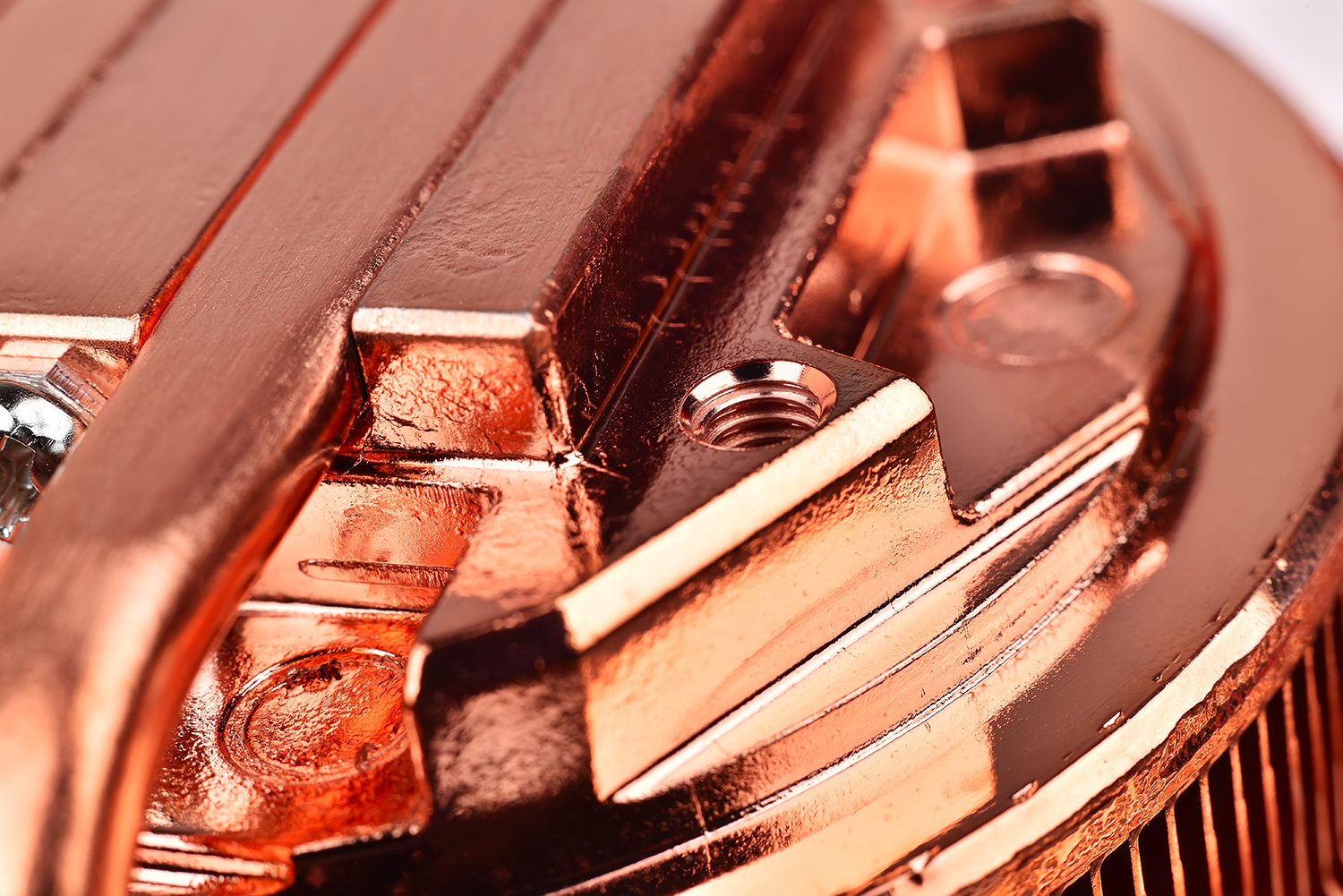
The machining of copper and brass presents unique challenges stemming from their conductive and mechanical properties. These demand in-depth knowledge and precision, spanning from chip and thermal management during machining to the complexities of welding. A systematic approach and extensive experience, such as MIBA's, are crucial to transform these challenges into reliable components that consistently meet the highest standards.
Introduction to Machining Challenges
The machining of copper and brass stands as a critical area within metal fabrication where process experience and precision dictate a component's success or failure. These are not common metals. Their unique properties – outstanding thermal and electrical conductivity*, coupled with remarkable corrosion resistance – make them indispensable in high-tech sectors such as electromechanical, energy, and fluid dynamics. However, these very characteristics introduce complex technical challenges that demand a methodical approach and deep material understanding.Managing these alloys extends beyond merely executing a drawing; it requires anticipating and resolving tangible problems that arise directly on the shop floor, where theoretical principles confront the physical reality of metals.
The Technical Complexities of Machining Copper and Brass
uccessfully machining these materials requires understanding their behavior under mechanical and thermal stress. Pure copper, for instance, is renowned for its ductility, a property that makes it difficult to machine by chip removal. During milling or turning, it tends to produce long, gummy chips that do not break easily, wrapping around the tool, compromising surface finish, and causing accelerated wear. Brass, an alloy of copper and zinc, offers improved machinability precisely because the addition of zinc (and in some specific alloys, lead) modifies its structure, resulting in shorter, more brittle chips.Heat management presents another critical factor. Copper'shigh thermal conductivity , a tremendous advantage in its end-use as a heat sink or conductor, becomes a significant obstacle during production. The heat generated by tool friction dissipates so rapidly into the workpiece that it can cause substantial thermal deformations . This leads to the classic problem of the material'warping' or 'bowing', a phenomenon that results in costly production scrap and out-of-spec dimensional tolerances, rendering the component unusable. To control these effects, applying a generic coolant is insufficient. We must define specific cutting parameters, utilize tools with appropriate geometries and coatings, and, in some cases, design work cycles that alternate machining phases with cooling breaks.
Integrated Solutions and MIBA's Approach
The complexities do not end with mechanical machining; they extend to all phases of the production process, particularly assembly and welding. Welding copper or its alloys requires rigorous control of heat input. The very conductivity that complicates mechanical machining makes it challenging to concentrate heat in the joint area, necessitating high power levels. If not precisely managed, these can distort the entire assembly. This is where the most insidious problems emerge, such as welding fixtures that 'do not align'. Minimal deformation on a single part, accumulated across multiple components, can render final assembly impossible, nullifying hours of labor and material.This is where MIBA's approach, backed by 50 years of experience, proves its value. Our methodology is built on integrated process control, guaranteed by a robust quality management system and unwavering attention to safety and environmental responsibility.