Fiber Laser Cutting: Precision, Efficiency, and Cost Reduction
3 February, 2026
Summary
In today's industrial landscape, fiber laser cutting is a revolutionary technology meeting the demand for precision and quality in metal components. With 50 years of experience, MIBA has integrated this technology to overcome common workshop challenges, ensuring micrometric accuracy, high speeds, and operational flexibility. The benefits extend from superior finished part quality to significant energy efficiency, positioning fiber laser cutting as a strategic choice to optimize processes and achieve lasting competitive advantage.
The Industrial Evolution and Benefits of Fiber Laser Cutting
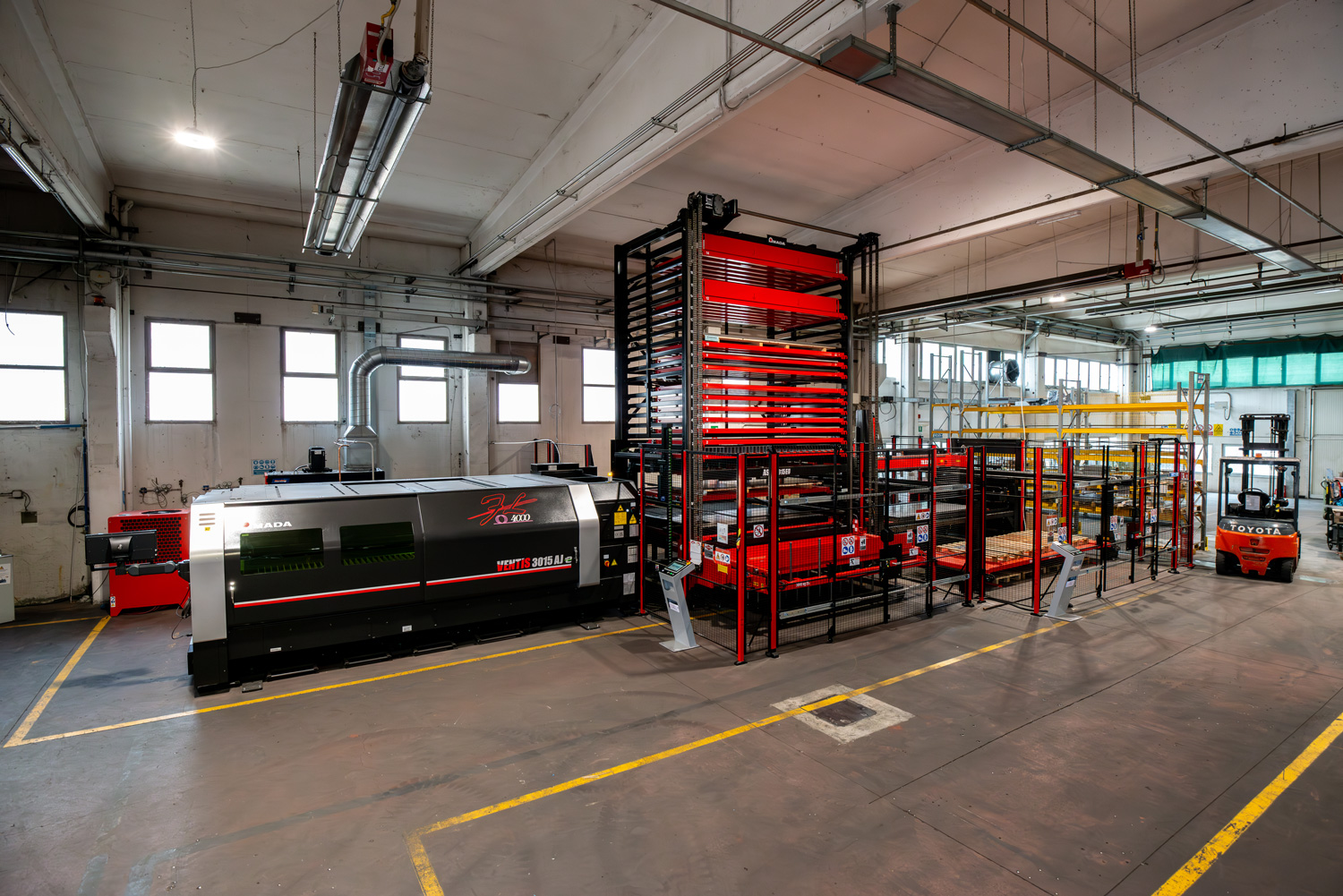
The current industrial landscape demands increasingly precise metal components with tight tolerances and impeccable finishes, driving companies to seek advanced solutions. Fiber laser cutting emerges as a revolutionary technology, offering advantages far beyond mere production speed. For professionals such as designers, purchasing managers, and technical CEOs, a deep understanding of Fiber laser cutting 's mechanisms and implications is crucial for process optimization and ensuring a significant return on investment.With 50 years of experience in metal fabrication, MIBA has witnessed and participated in the evolution of sheet metal processing techniques, consistently investing in technologies that elevate quality standards. The introduction of Fiber laser cutting marked a turning point, solving numerous real-world workshop issues. Consider production waste due to imprecise cuts, material warping from excessive thermal deformation, or welding jigs that fail to align due to unmet tolerances. These problems directly impact costs and delivery times, compromising competitiveness.The Fiber laser cutting technology utilizes a laser beam generated by diodes and amplified through optical fibers, then focused onto the material surface. The beam's high power density melts or vaporizes the metal with extreme speed and localization. This process yields a series of tangible benefits:cutting accuracy is micrometric, enabling the creation of complex details and small holes on thick materials. Processing speed, especially on thin to medium-gauge sheets, significantly surpasses other technologies like CO2 laser or plasma cutting. The result is increased productivity and reduced cycle times – fundamental elements for any manufacturing operation.
Technical Details, Quality, and Process Sustainability
A distinctive aspect of Fiber laser cutting is its operational flexibility. This technology processes a wide range of metals – from carbon steel and stainless steel to aluminum, copper, and brass – with optimal performance. The ability to rapidly adjust cutting parameters allows for adaptation to various materials and thicknesses without significant interruptions. This offers a notable advantage in production environments where diversified orders are the norm. Furthermore, metals absorb fiber laser energy more effectively than CO2 lasers, making it particularly efficient on reflective materials. This efficiency translates into reduced energy consumption, contributing to more sustainable operations and lower running costs.The impact on finished part quality is clear. The heat-affected zone (HAZ) is minimal, significantly reducing material deformation. This is crucial for parts requiring subsequent assembly or tight tolerance maintenance. Cut edge finish is generally superior, often eliminating the need for further mechanical operations such as deburring or grinding, processes that introduce additional costs and time. For a purchasing manager, this means receiving ready-to-use components with fewer intermediate steps and enhanced reliability.From a sustainability perspective, Fiber laser cutting excels in energy efficiency. Fiber lasers boast significantly higher wall-plug efficiency compared to CO2 lasers, converting a greater percentage of electrical energy into usable optical power. This not only lowers operational costs but also reduces the environmental footprint of manufacturing activities. In an era where sustainability is increasingly critical, adopting such innovative technologies becomes a significant competitive factor.
MIBA: Experience and Added Value in Fiber Laser Cutting
Leveraging 50 years of experience, MIBA has fully integrated Fiber laser cutting into its production processes, alongside other advanced technologies. This enables us to tackle the most complex orders with guaranteed maximum precision and reliability. Our expertise extends beyond mere cutting execution to design consultation, where we help clients optimize designs to fully leverage fiber laser technology's potential, reducing material waste and improving overall efficiency. This proactive approach is underpinned by an ISO 9001 certified quality management system, ensuring traceability and compliance for every process. Furthermore, ISO 14001, ISO 45001, and EN 1090 certifications underscore our commitment to environmental sustainability, occupational safety, and the structural quality of our products.Il Fiber laser cutting is not merely a faster machine; it is a tool that, when managed with the competence and experience MIBA has amassed over half a century, allows us to overcome the limitations of traditional manufacturing. This translates into greater design freedom for engineers, reduced total costs for purchasing managers, and a lasting competitive advantage or technical CEOs, who can rely on high-quality, efficient, and sustainable production.